
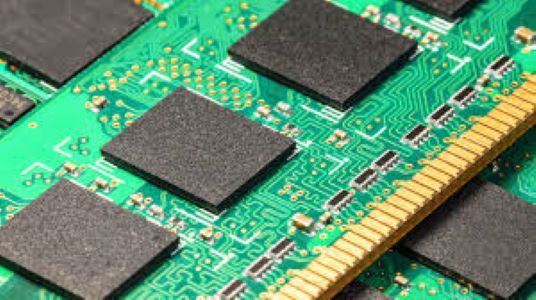
The global semiconductor industry is entering a new phase of constraint as Micron confirms an unprecedented memory shortage extending beyond 2026, driven by explosive AI infrastructure demand. What was once a cyclical DRAM market is now structurally reshaped by AI accelerators, HBM stacking, advanced packaging limits, and long-lead-time capital investment cycles.
- The AI-driven memory shortage is no longer temporary — it is structural. AI data centers are consuming disproportionate volumes of DRAM and HBM, permanently altering supply allocation, pricing power, and production priorities across the semiconductor ecosystem.
- High-Bandwidth Memory has become the true bottleneck of AI compute scaling. HBM requires significantly more wafer capacity, advanced packaging steps, and yield optimization, tightening supply even as fabs expand capital expenditure.
- Memory pricing dynamics are shifting from commodity behavior to strategic scarcity. Sustained shortages give memory suppliers stronger margins, while OEMs and hyperscalers face higher bill-of-materials costs and longer procurement lead times.
- Advanced packaging capacity now limits system-level performance as much as logic nodes. CoWoS, 2.5D/3D integration, and HBM stacking constraints are slowing AI accelerator deliveries despite strong front-end wafer output.
- Capital investment is accelerating, but capacity relief remains years away. New fabs and backend expansions demand multi-year timelines, meaning supply-demand imbalance will persist well into the second half of the decade.
- OEMs and cloud providers are being forced to rethink sourcing strategies. Diversification across regions and suppliers is becoming essential as memory allocation increasingly favors AI over consumer electronics.
- The semiconductor value chain is shifting upstream toward packaging, materials, and talent. Carrier tapes, reels, trays, and thermoforming solutions are now critical enablers for advanced packages, chiplets, and panel-level integration.
- Financial forecasts across consumer electronics are under pressure. Elevated memory costs directly impact smartphones, PCs, and servers, reshaping pricing strategies and demand elasticity across global markets.
- For the semiconductor industry, the AI memory crunch accelerates consolidation and specialization. Companies with advanced packaging capability, HBM expertise, and resilient supply chains gain structural advantage over generalist players.
- Across Asia-Pacific, employment demand is rising for advanced packaging, process, and leadership roles. Shortages of experienced engineers, managers, and technical specialists are intensifying competition for talent in semiconductor hubs such as Taiwan, Korea, Singapore, Malaysia, and Japan.
Facing advanced semiconductor packaging constraints or difficulty hiring senior executives and skilled engineers fast enough to scale?
We deliver high-quality carrier tapes, cover tapes, reels, and thermoforming trays tailored for the industry’s most in-demand and advanced packages — from PDIP, SOIC, and QFNs to WLCSP, chiplets, modules, and panels.
At the same time, we connect you with the best-fit Senior Management leaders, Professionals, and Technical Staff to strengthen your organisation.
For enquiries or more information, please visit https://tmbsconsulting.com or contact Richard Chuck Olivas via WhatsApp: https://wa.me/6583393490
#Semiconductors #AIChips #AdvancedPackaging #HBM #Chiplets #GAA #TechLeadership #ExecutiveSearch #ProfessionalRecruitment #RemoteStaffing