
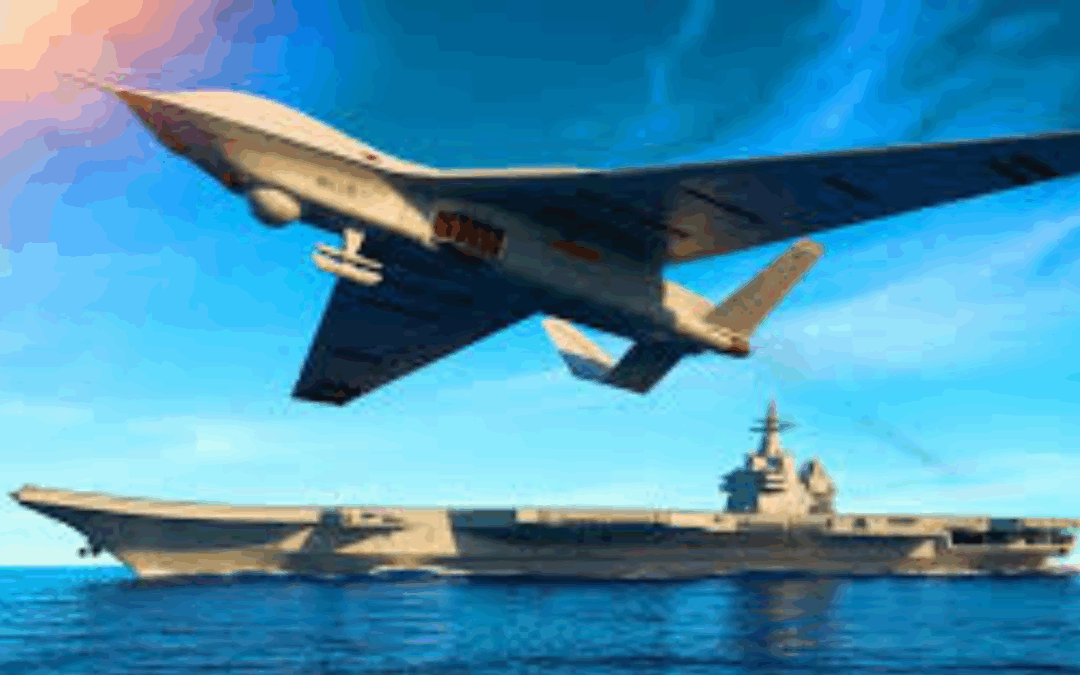
Reports from Reuters and Tom’s Hardware suggest that China’s new DeepSeek-powered autonomous combat drone may be using NVIDIA’s restricted H100 chips, despite U.S. export controls.
While not independently verified, the story highlights how semiconductors have become central to modern warfare, powering autonomous drones, robotic combat vehicles, and advanced command-and-control systems.
hashtagSemiconductors hashtagArtificialIntelligence hashtagNvidia hashtagDeepSeek hashtagDefenseTechnology hashtagAIChips hashtagAutonomousDrones hashtagElectronicWarfare hashtagAsiaPacific hashtagInnovationLeadership
- China’s Deepseek AI-powered autonomous combat drone is suspected to use NVIDIA‘s H100 AI chips despite U.S. export controls, highlighting the increasing role of semiconductors in modern military operations.
- Advanced military systems now heavily rely on AI processors: autonomous drones, AI-powered surveillance platforms, electronic warfare systems, robotic combat vehicles, command-and-control software, and modern missile systems including intercontinental ballistic missiles (ICBMs). These chips enable real-time target acquisition, threat assessment, strategic coordination, and precision strike capabilities.
- Autonomous drone swarms and robotic combat vehicles leverage high-performance AI processors to enhance speed, precision, and battlefield effectiveness. Access to Nvidia H100-level computing can define tactical superiority in simulated and real-world operations.
- NVIDIA’s H100 remains the global benchmark for AI training and inference, powering both defense applications and civilian high-performance computing workloads such as autonomous vehicles, robotics, and industrial AI.
- Export restrictions on high-end GPUs have turned semiconductors into strategic leverage points, forcing governments and organizations to weigh operational capability against compliance and geopolitical risk.
- DeepSeek demonstrates that scarcity of high-performance semiconductors directly affects mission readiness, system capabilities, and innovation pace. Limited access to advanced AI chips slows operational deployment and shifts competitive advantage to those with secure supply chains.
- The case also shows the intertwining of AI and semiconductors with global industry. Cloud computing, robotics, and industrial automation firms must plan around chip availability and regulatory constraints to maintain innovation cycles.
- As AI converges with defense, logistics, and automation, semiconductor manufacturers face pressure to deliver high-performance, secure, and traceable chips while balancing regulatory and market demands.
- Semiconductor shortages or restrictions ripple across the global industry, impacting system integration, operational timelines, and strategic planning. The DeepSeek story underscores the critical role of chips in both defense and commercial technology leadership.
- Across Asia-Pacific, the semiconductor surge is transforming employment. Rising demand for engineers, AI specialists, system architects, and operations leaders is creating new high-tech and defense-related career pathways.
Need efficient semiconductor packaging or top executive and technical talent? We connect you with the best-fit Senior Management leaders, Professionals, and Technical Staff to strengthen your organisation. If this resonates, feel free to reach out: I personally check every message.
- For semiconductor packaging solutions (TnR & Thermoforming Trays): https://bit.ly/3NdBhGB | chuck@superpak.com.sg
- For leadership, professional, technical staff, & remote talent deployment: https://bit.ly/43myTXt | richard.olivas@tmbsconsulting.com
- or digital and software solutions: richard.olivas@tmbsconsultiong.com
- WhatsApp Chuck Olivas: +65 8339 3490
#Semiconductors #ArtificialIntelligence #Nvidia #DeepSeek #DefenseTechnology #AIChips #AutonomousDrones #ElectronicWarfare #AsiaPacific #InnovationLeadership