
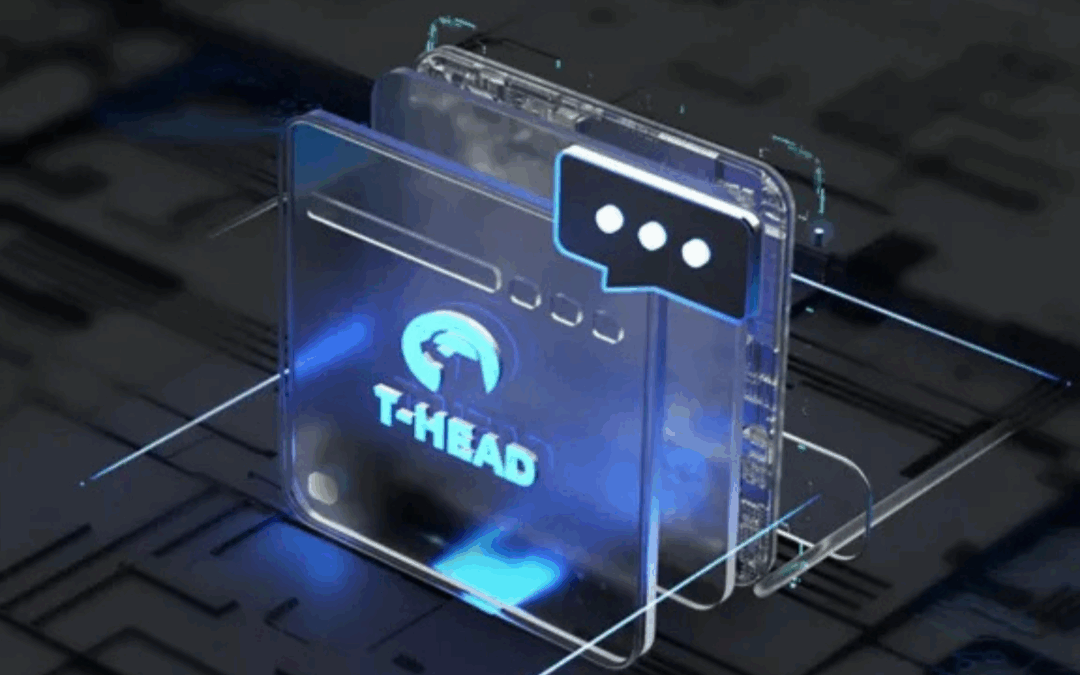
Alibaba has launched its own AI accelerator, underscoring semiconductor sovereignty as a strategic priority amid global supply-chain pressures.
Its T-Head Parallel Processing Unit (PPU), built with domestic foundries, is explicitly designed to navigate U.S. export restrictions while positioning Alibaba as a direct competitor to Nvidia in China.
hashtagSemiconductor hashtagTechInnovation hashtagSupplyChain hashtagLeadership hashtagAsiaPacific
- Alibaba Group has introduced a new AI chip designed to run artificial intelligence applications like chatbots, image recognition, and recommendation engines. Instead of relying only on foreign suppliers, Alibaba is creating its own technology to power future digital services.
- The chip is called the T-Head PPU (Parallel Processing Unit). It functions as a high-performance “brain,” capable of handling multiple AI tasks simultaneously, thereby accelerating responses and improving system efficiency for businesses and consumers.
- Unlike traditional processors, this chip is specially tuned for inference – the stage where trained AI models are put to work. This means Alibaba can offer lower-cost, high-speed performance in real-world AI products and cloud services.
- The PPU comes with 96 GB of high-bandwidth memory (HBM2e) and a 700 GB/s interconnect, positioning it to rival NVIDIA’s H20 accelerator while exceeding the performance of older chips still in circulation.
- With a 400-watt power envelope, the chip is built for deployment in large data centers, making it practical for scale without major infrastructure changes.
- Alibaba claims the chip’s bill of materials (BOM) is about 40% lower than Nvidia’s H20, allowing it to compete aggressively on price while preserving healthy margins.
- Passing this advantage to customers, Alibaba’s cloud division has announced it can cut AI inference service pricing by up to 50%, offering a strong incentive for adoption.
- The first large-scale contract is already signed: China Unicom is deploying 16,384 units, representing roughly 72% of chips in a $390 million data center project.
- Beyond Alibaba, this move is expected to ripple across the global semiconductor ecosystem – from packaging and assembly to design software and foundries – as more companies explore alternatives to U.S.-based suppliers.
- In the Asia-Pacific region, this trend will drive demand for new jobs in chip design, advanced packaging, systems integration, and AI infrastructure, creating opportunities for both technical experts and business leaders.
Need efficient semiconductor packaging or top executive and technical talent? We deliver high-quality carrier tapes, cover tapes, reels, and thermoforming trays tailored for the industry’s most in-demand and advanced packages – from PDIP, SOIC, and QFNs to WLCSP, Chiplets, modules, and panels. At the same time, we connect you with the best-fit Senior Management leaders, Professionals, and Technical Staff to strengthen your organization. If this resonates, feel free to reach out – I personally check every message
- For packaging solutions: https://bit.ly/3NdBhGB
- For leadership, technical talent and remote staffing needs: https://bit.ly/43myTXt
- Contact: chuck@superpak.com.sg | richard.olivas@tmbsconsulting.com
- WhatsApp Chuck Olivas at +65 8339 3490.
#Semiconductors, #Electronics, #AI, #Technology, #Manufacturing, #SupplyChain, #Engineering, #Jobs, #Hiring, #Recruiting