
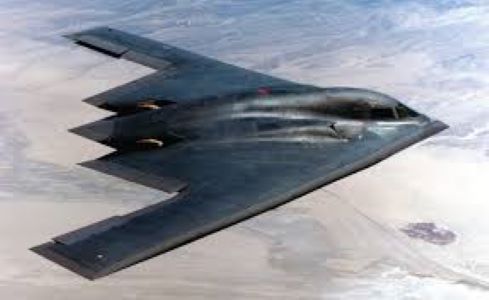
The world is closely monitoring the prospect of US intervention in the intensifying Israel-Iran conflict. Should the US intervene, military analysts are eyeing the possibility of a strategic deployment of the B-2 Spirit stealth bomber – an advanced platform renowned for its superior stealth and deep-penetration capabilities critical for precision strikes against Iran’s nuclear infrastructure.
#MilitaryTechnology #SemiconductorIndustry #DefenseManufacturing #B2StealthBomber #IsraelIranConflict
- Should the US intervene, military analysts are eyeing the possibility of a strategic deployment of the B-2 Spirit stealth bomber – an advanced platform renowned for its superior stealth and deep-penetration capabilities critical for precision strikes against Iran’s nuclear infrastructure.
- The US has been actively preparing to deploy its B-2 Spirit stealth bombers if it becomes involved in the Israel-Iran conflict. This readiness signals a strategic move to leverage the bomber’s advanced capabilities in a potential military escalation.
- The Pentagon has positioned at least six B-2 bombers at Diego Garcia, a key US-UK base in the Indian Ocean, representing about 30% of the fleet. Launching missions from Diego Garcia, roughly 2,400 miles from Iran’s coast, helps minimize exposure to Iranian air defenses while targeting fortified nuclear sites like Fordow.
- The B-2 Spirit bomber remains the world’s most powerful operational stealth platform, with a unique flying-wing design and radar-deflecting shape that makes it nearly invisible to radar. Built for long-range precision strikes, it can hit hardened underground targets with minimal detection.
- The B-2 integrates military-grade semiconductors across its electronic warfare systems, navigation controls, and communications, prioritizing hardened chipsets over cutting-edge miniaturization. This ensures mission resilience under extreme electromagnetic conditions.
- Its avionics and battle systems are built on modular open architecture, enabling frequent upgrades using commercial-off-the-shelf (COTS) components. This approach allows the US Air Force to quickly install new silicon without full system rewiring or software rebuilds.
- Five of the most critical chip types used in the B-2 include radiation-hardened FPGAs, ASICs for sensor fusion, GaN-based radar amplifiers, ruggedized Intel/AMD processors (~90-130nm), and encrypted datalink modules. These chips ensure operational stability in contested environments while enabling secure communications and smart weapon delivery.
- The bomber’s AESA radar system relies on gallium nitride (GaN) semiconductors, giving it superior range, low power consumption, and reduced heat emissions. These radars are critical for threat detection and electronic countermeasures while operating deep inside enemy territory.
- Its electronic warfare suite borrows from systems used in the F-35, integrating custom ASICs for real-time radar warning and jamming. These chips are specifically optimized for high-bandwidth signal processing and directional frequency response.
- Despite being over three decades old, the B-2 remains a symbol of digital warfare thanks to its continuous chip modernization strategy built around advanced semiconductor chips. Its successor, the B-21 Raider, enhances this legacy with next-generation stealth, AI-assisted mission systems, drone swarm coordination, and an open-architecture framework engineered to rapidly integrate new defense technologies in real time while preserving global strike dominance.
- The B-2’s unit cost exceeds $2 billion when including R&D, maintenance, and system upgrades, making it one of the most expensive military aircraft ever. Each flight mission reflects a high-stakes return on semiconductor investments, involving thousands of specialized chips.
- If deployed in the Israel-Iran conflict, the global semiconductor industry could see a short-term surge in demand for rugged military chips. However, the use of such precision strike aircraft will also underscore the painful cost of war, where human lives and civilian infrastructure may suffer irreversible damage.
- In Asia-Pacific, further geopolitical instability may drive both demand and anxiety in semiconductor manufacturing hubs like Taiwan, South Korea, and Malaysia. Increased defense chip orders could mean more jobs – but also rising tension, export restrictions, and unpredictable labor pressures in the tech supply chain.
Frustrated by rising packaging costs, inconsistent quality, or unresponsive customer support? Unlock cost-effective, high-quality semiconductor packaging solutions for your various package types from advanced architectures like Fan-Out, 2.5D/3D IC, and Chiplet Integration to legacy types like WLCSP, BGA, QFP, SSOP, TSOP, and PDIP. We’re here to support you every step of the way.
- Fill out this brief questionnaire: https://bit.ly/3NdBhGB
- Contact Chuck Olivas at chuck@superpak.com.sg for more info.
Struggling to secure top-tier C-Suite or Professional / Technical talent while key roles stay vacant, KPIs are missed / unmet, productivity stalls, and your team is overwhelmed by misaligned candidates and drawn-out hiring cycles
TMBS Consulting specializes in the search and placement of Senior Management Team members, seasoned Professionals, and Technical experts, with a proven track record of delivering top-tier talent in manufacturing, engineering, logistics, IT, and finance.
- Share your hiring challenges here: https://bit.ly/43myTXt
- Contact Chuck Olivas at richard.olivas@tmbsconsulting.com – Let’s build your Dream Team.
#semiconductormanufacturing #SemiconductorSolutions #semiconductorjobs #semiconductorgrowth#ExecutiveSearch #LeadershipHiring #StrategicRecruitment #HiringTopTalent #CLevelRecruiting #semiconductors #semiconductorindustry